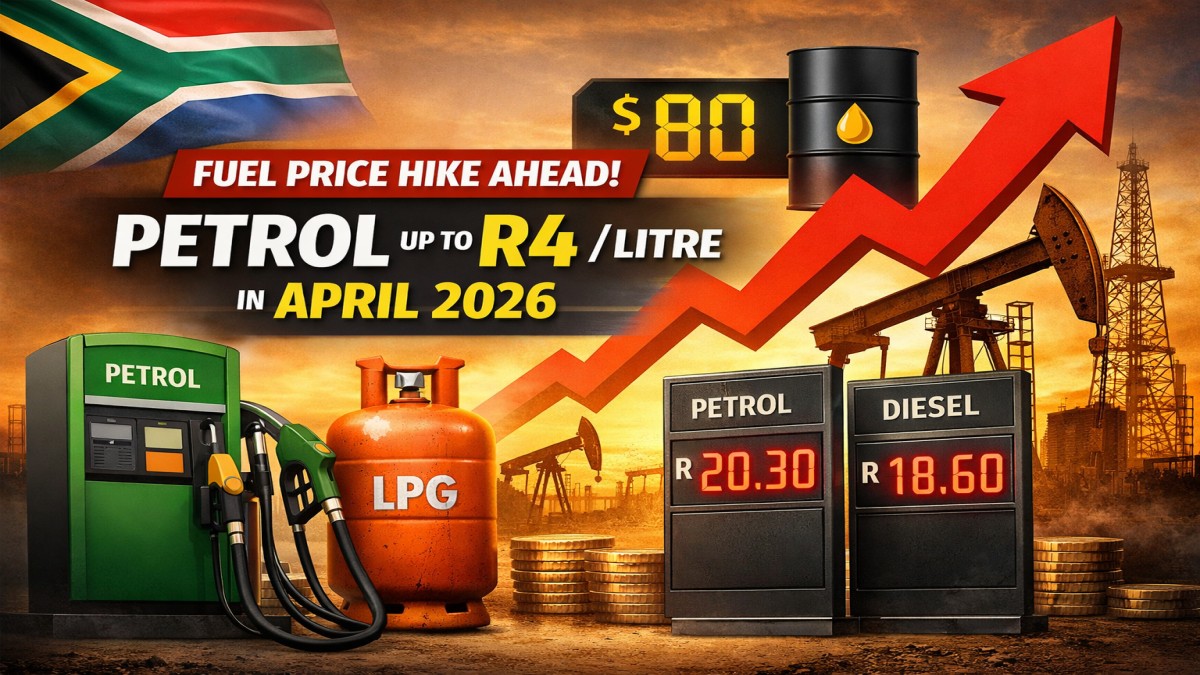
South Africans may soon face another sharp increase in fuel costs, with early projections warning that petrol prices could rise by as much as R4 per litre in April 2026. While the final adjustment will depend on multiple economic factors, the current outlook suggests significant pressure building in global oil markets.
Fuel price hikes rarely affect motorists alone. When petrol and diesel become more expensive, the ripple effects often spread through transportation, food supply chains, and retail prices—ultimately impacting the broader economy and household budgets.
Rising Oil Prices Trigger Early Warning
Recent movements in international oil markets are one of the main reasons behind the warning of a potential price surge. During February, crude oil prices climbed sharply due to geopolitical tensions in the Middle East.
Oil prices reportedly moved from below $60 per barrel to above $80 per barrel during the month, with the largest jump occurring toward the end of the period. Such rapid increases in crude prices typically translate into higher fuel costs for importing nations like South Africa.
Although the South African rand strengthened against the US dollar during the same period—helping offset some of the increase—it was not enough to fully counterbalance the surge in global oil prices.
Official Fuel Price Adjustments for March 2026
The Department of Petroleum and Mineral Resources has already confirmed the official fuel price adjustments that came into effect on 4 March 2026.
Motorists and consumers have already begun to see moderate increases in several fuel categories.
Below is a summary of the changes announced:
| Fuel Type | Price Change |
|---|---|
| Petrol 93 | Increase of 20 cents per litre |
| Petrol 95 | Increase of 20 cents per litre |
| Diesel 0.05% (wholesale) | Increase of 62 cents per litre |
| Diesel 0.005% (wholesale) | Increase of 65 cents per litre |
| Illuminating Paraffin (Wholesale) | Increase of 44 cents per litre |
| LPGAS (Gauteng) | Increase of 23 cents per kg |
These adjustments reflect the rising international price of refined fuel products such as petrol, diesel, and paraffin.
Rand Strength Helps Limit Larger Increase
Currency movements also played an important role in determining the latest fuel price adjustments.
During the review period between 30 January 2026 and 26 February 2026, the rand strengthened against the US dollar compared with the previous month.
- Average exchange rate (current period): R15.9959/USD
- Previous period average: R16.3054/USD
The stronger rand helped reduce the contribution to the Basic Fuel Price.
- Petrol reduction impact: 16.959 cents per litre
- Diesel reduction impact: 19.200 cents per litre
- Paraffin reduction impact: 19.207 cents per litre
Despite this currency support, the increase in global fuel product prices still pushed the final retail prices higher.
Slate Levy Remains Unchanged
Under South Africa’s Self-Adjusting Slate Levy Mechanism, the slate levy on petrol and diesel will remain unchanged.
The levy will stay at:
The slate levy on petrol and diesel will remain unchanged at zero cents per litre starting from 4 March 2026.
This means consumers will not face additional cost pressure from this component of the fuel price formula—for now.
LPG Gas Price Adjustments
The Maximum Refinery Gate Price (MRGP) for LPGAS has also increased during the current pricing cycle.
- Standard MRGP: R11,470.61 per metric ton (636.619 c/l)
- Imported LPGAS through Saldanha Bay Port: R13,076.49 per metric ton (725.745 c/l)
This translates to an increase of roughly 23–26 cents per kilogram, depending on supply routes.
Fuel Prices at the Pump: Inland vs Coastal
The following tables show how the new prices compare with February levels.
Inland Fuel Prices
| Fuel | February Official | March Official |
|---|---|---|
| 93 Petrol | R19.99 | R20.19 |
| 95 Petrol | R20.10 | R20.30 |
| Diesel 0.05% (wholesale) | R17.91 | R18.53 |
| Diesel 0.005% (wholesale) | R17.95 | R18.60 |
| Illuminating Paraffin | R12.10 | R12.54 |
| LPGAS (per kg) | R34.74 | R34.97 |
Coastal Fuel Prices
| Fuel | February Official | March Official |
|---|---|---|
| 93 Petrol | R19.20 | R19.40 |
| 95 Petrol | R19.27 | R19.47 |
| Diesel 0.05% (wholesale) | R17.08 | R17.70 |
| Diesel 0.005% (wholesale) | R17.19 | R17.84 |
| Illuminating Paraffin | R11.08 | R11.52 |
| LPGAS (per kg) | R31.48 | R31.72 |
| LPGAS (Saldanha) | R33.58 | R33.84 |
Why Diesel Prices Matter for the Economy
Diesel prices are especially important because they directly affect logistics and transportation. Trucks that move food, consumer goods, and raw materials rely heavily on diesel fuel.
When diesel prices increase:
- Transport costs rise
- Supply chain expenses grow
- Retail prices often increase later
This chain reaction means fuel shocks can quickly turn into inflation pressures across the economy, affecting consumers who may not even own vehicles.
What Consumers Should Expect Next
The projected R4 increase in April is still an early estimate and may change depending on several factors:
- Global oil price movements
- Rand-dollar exchange rate fluctuations
- Geopolitical developments in oil-producing regions
For now, the warning serves as a signal for households and businesses to prepare for possible higher fuel expenses in the coming months.
If global energy markets remain volatile, South Africans may once again face a period of rising transportation and living costs.