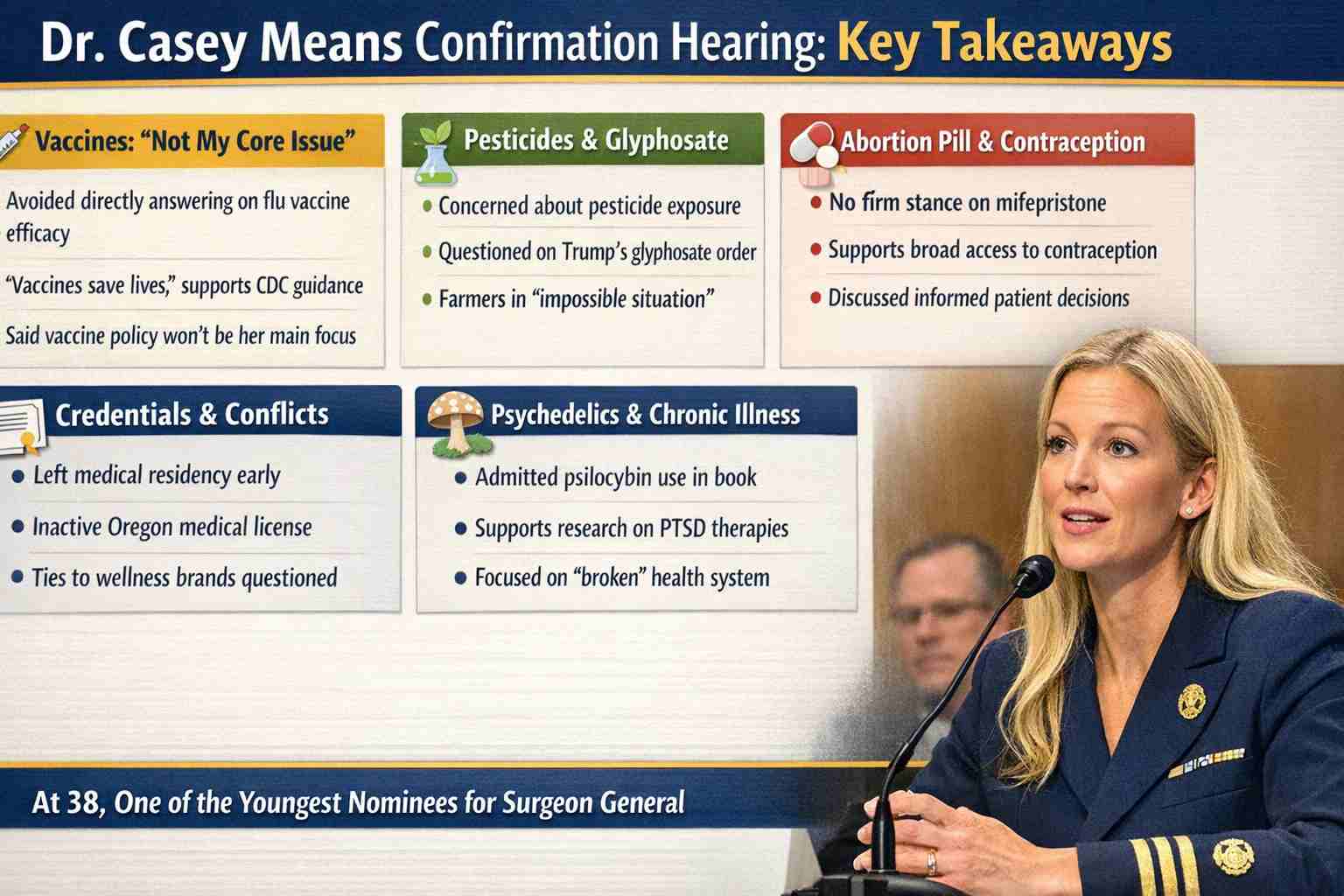
Dr. Casey Means, President Donald Trump’s nominee for surgeon general, faced more than two hours of pointed questioning before the Senate Health, Education, Labor and Pensions Committee. Lawmakers from both parties pressed her on vaccines, abortion, pesticides, credentials, and potential conflicts of interest.
Here are the major highlights:
Vaccines: “Not My Core Issue”
Vaccines dominated much of the hearing.
- Democratic Sen. Tim Kaine repeatedly asked whether flu vaccines reduce hospitalization and death.
- Means avoided directly answering at first, saying broadly that “vaccines save lives” and that she supports CDC guidance.
- After persistent questioning, she acknowledged that at a population level, flu vaccines can reduce risk.
She emphasized that vaccine policy would not be a central focus of her tenure as surgeon general.
Republican senators including Bill Cassidy and Lisa Murkowski questioned her views on the hepatitis B vaccine, which had previously been recommended for all infants at birth. Means called it “an important vaccine” while also stressing parental autonomy.
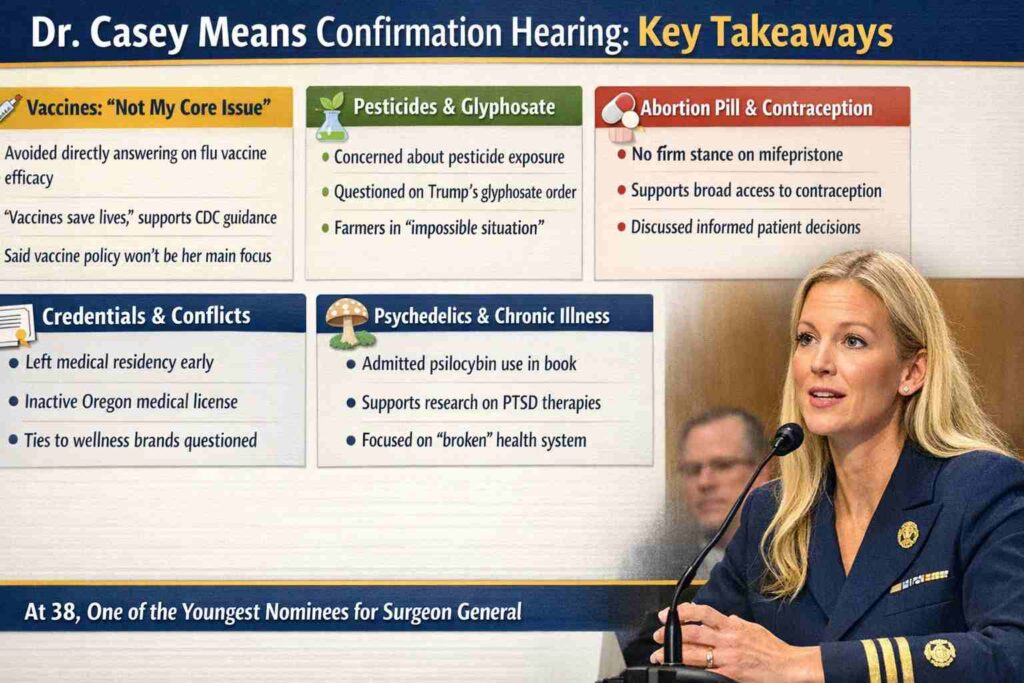
Image Credit: AI-generated infographic / ChatGPT Image Tool
Pesticides and Glyphosate
Means has long expressed concern about pesticide exposure, aligning with Health and Human Services Secretary Robert F. Kennedy Jr. and the “Make America Healthy Again” movement.
However, she was questioned about President Trump’s recent executive order protecting the national glyphosate supply.
- Means said pesticide use is complex and cannot be eliminated overnight.
- She described farmers as being in an “impossible situation.”
- She maintained she remains “gravely concerned” about health impacts and supports continued scientific study.
Though the surgeon general does not regulate pesticides, the office can issue influential public health reports.
Abortion Pill and Contraception
Means declined to take a firm position on whether the abortion pill mifepristone should be limited to in-person prescribing.
She said:
- The issue falls outside the surgeon general’s authority.
- Patients should have thorough conversations with doctors before taking medications.
On contraception, which she has previously criticized in podcast interviews, she clarified that she supports broad access but believes patients should fully understand risks and benefits.
Credentials and Conflicts
Democrats scrutinized her background:
- Means left her medical residency before completion.
- Her Oregon medical license is inactive.
- She confirmed she has no plans to reactivate it and cannot currently prescribe medication.
She defended her qualifications, citing her Stanford medical education and public health communication experience.
Lawmakers also questioned financial ties to wellness brands and supplement companies, including paid endorsements. Means stated she worked with ethics officials and has disclosed conflicts.
Psychedelics and Personal Use
Sen. Susan Collins questioned Means about her public discussion of personal psilocybin use, described in her 2024 book Good Energy.
Means said:
- Research into psychedelic therapies for PTSD and mental health is promising.
- As a public official, she would follow evidence-based science.
- Her personal views may differ from what she would communicate in an official role.
Secretary Kennedy has also shown interest in psychedelic research.
Broader Themes
Means framed her nomination around addressing chronic illness and what she called a “broken” health system overly focused on reactive care rather than root causes like nutrition and lifestyle.
At 38, she is one of the younger nominees for surgeon general in modern history and a prominent voice in the MAHA movement.
Her confirmation now depends on whether senators are persuaded that her alternative-health advocacy can translate into evidence-based public health leadership.