North Korea Fires Ballistic Missiles Into Sea During US–South Korea Military Drills
Missile Launch Overview
- Country: North Korea
- Missiles Fired: Around 10 Ballistic Missiles
- Launch Location: Near Pyongyang (Sunan Area)
- Launch Time: Around 1:20 PM Seoul Time
- Estimated Range: About 350 km
- Landing Area: Sea east of Korean Peninsula
- Context: US–South Korea Freedom Shield Military Drills
- Response: Condemnation from South Korea and Japan
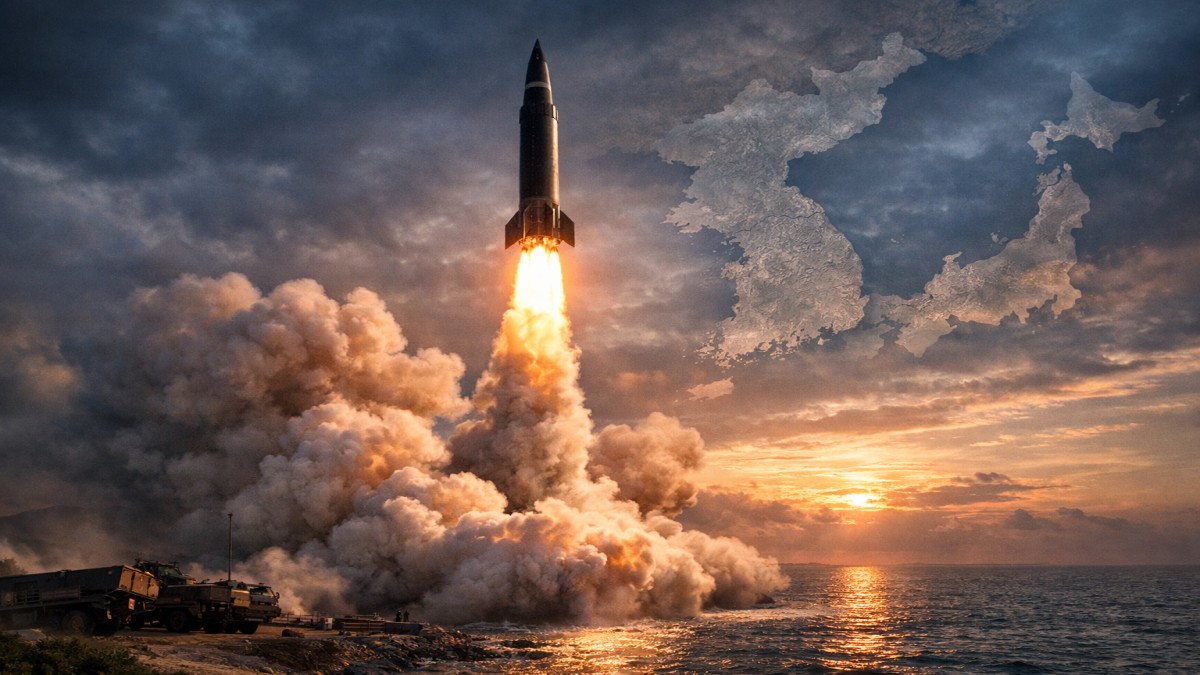
North Korea fired a series of ballistic missiles into the sea on Saturday, escalating tensions in East Asia as the United States and South Korea continue their joint military exercises in the region. According to South Korea’s military authorities, around ten missiles were launched from an area near the North Korean capital Pyongyang at approximately 1:20 pm local time. The projectiles traveled roughly 350 kilometers before landing in waters off the eastern coast of the Korean Peninsula.
The launches were detected by South Korea’s Joint Chiefs of Staff, which confirmed the incident shortly afterward in an official statement. Military officials in Seoul said they are closely analyzing the type, range, and technical details of the missiles in coordination with the United States.
The missile tests come at a sensitive time when regional security concerns are already high due to the ongoing Freedom Shield military drills conducted by the US and South Korea. These annual exercises are designed to strengthen joint defense capabilities and improve readiness against potential threats.
Read More
NASA’s Van Allen Probe A is expected to re-enter Earth’s atmosphere in 2026 after spending 14 years studying radiation belts around our planet. Scientists say the spacecraft helped revolutionize space weather research.
North Korea Launches 10 Ballistic Missiles Toward East Sea
| Key Detail | Information |
|---|---|
| Missile Type | Ballistic Missiles |
| Number of Launches | Approximately 10 |
| Launch Area | Sunan Region near Pyongyang |
| Distance Travelled | About 350 km |
| Exercise Ongoing | Freedom Shield (US–South Korea) |
| Japan Impact | Missiles Landed Outside EEZ |
South Korean defense officials reported that approximately ten ballistic missiles were launched toward what South Korea refers to as the East Sea, also known internationally as the Sea of Japan. The missiles were fired within a short time frame, suggesting a coordinated launch designed to demonstrate North Korea’s missile capabilities.
The Joint Chiefs of Staff said the launches were detected using radar and other surveillance systems, allowing military authorities to track the trajectory of the projectiles. Although detailed technical information about the missiles has not yet been released, analysts believe they were likely short-range ballistic missiles.
Such tests are often viewed as demonstrations of military strength and strategic messaging by Pyongyang. North Korea has repeatedly carried out missile launches during periods of heightened tensions or major military exercises conducted by its regional rivals.
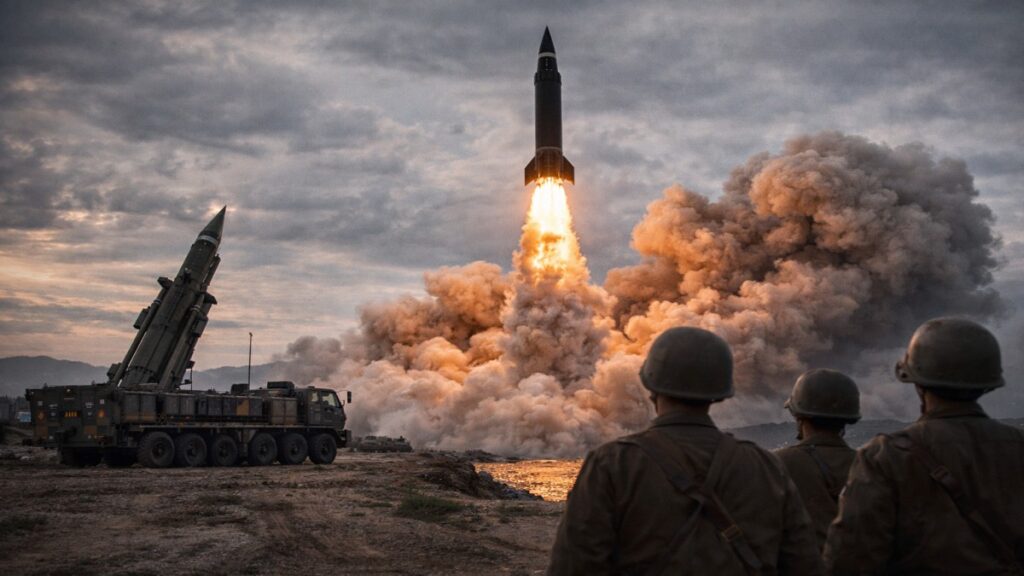
Image Credit: AI Generated
Also Read
Oil Shock 2026: South Africa Fuel Prices Could Jump R5–R8 Per Litre as Brent Crude Surges Above $100Rising global oil prices are expected to push South Africa’s fuel costs sharply higher in 2026. With Brent crude crossing the $100 mark, experts warn petrol and diesel prices could increase by R5–R8 per litre, putting additional pressure on households and businesses.
Missiles Fired From Pyongyang Area, Travelled About 350 km
According to South Korea’s military, the missiles were launched from the Sunan area near Pyongyang, the capital of North Korea. After launch, the projectiles traveled approximately 350 kilometers before landing in the sea east of the Korean Peninsula.
Military authorities are currently analyzing the flight characteristics, including altitude and speed, to determine the exact type of missiles used in the test. The information will help defense experts assess the capabilities of North Korea’s missile program.
Despite the launches, officials confirmed that the missiles did not pose an immediate threat to South Korea or neighboring countries. However, security agencies in the region remain on high alert, closely monitoring North Korean military activities for any further developments.
North Korea has conducted numerous missile tests over the past two decades as part of its efforts to develop advanced weapons systems capable of delivering nuclear payloads. International observers believe the country has made significant progress in missile technology despite strict economic sanctions.
South Korea Condemns Launch as UN Sanctions Violation
The South Korean government strongly condemned the missile launches, describing them as a clear violation of United Nations Security Council resolutions. Several UN sanctions prohibit North Korea from conducting ballistic missile tests due to concerns that such technology can be used to deliver nuclear weapons.
In response to the incident, South Korea’s presidential office issued a statement calling the launches a serious provocation that threatens regional stability. Officials urged North Korea to immediately halt activities that escalate tensions on the Korean Peninsula.
South Korea’s military also emphasized that it remains fully prepared to respond to any potential provocation. Defense authorities said the country maintains strong coordination with the United States to ensure a swift and decisive response if necessary.
The United Nations has imposed multiple sanctions on North Korea since 2006 in an attempt to curb its nuclear weapons and ballistic missile programs. Despite these measures, Pyongyang has continued to conduct tests, arguing that its weapons development is necessary for national defense.
Japan Confirms Missiles Fell Outside Its Exclusive Economic Zone
Japan also confirmed the missile launches shortly after South Korea’s announcement. Japanese Defense Minister Shinjiro Koizumi stated that the missiles appeared to have landed outside Japan’s Exclusive Economic Zone, meaning they did not violate Japanese territorial waters.
According to Japanese authorities, there were no reports of damage to ships or aircraft operating in the region. The country’s coast guard had earlier issued alerts about a possible missile launch and advised vessels to remain cautious while further information was gathered.
Following the launch, Japan’s prime minister’s office established an emergency response team at the crisis management center. Government agencies were instructed to collect and analyze information about the incident and ensure the safety of aircraft and maritime traffic.
Japan has frequently expressed concern over North Korea’s missile tests, particularly when projectiles travel toward waters close to Japanese territory.
Launch Comes During Freedom Shield Military Exercises
The missile launches occurred while the United States and South Korea are conducting their annual Freedom Shield military exercises. The drills, which began earlier in March and are scheduled to continue until March 19, involve thousands of troops and extensive training activities.
Freedom Shield includes computer-simulated scenarios as well as field exercises designed to test joint operational readiness. The exercises aim to improve coordination between US and South Korean forces in case of a potential security crisis on the Korean Peninsula.
North Korea has consistently criticized these drills, describing them as rehearsals for a possible invasion. In response, the country often conducts its own military demonstrations, including missile launches and artillery tests.
Officials in Washington and Seoul, however, maintain that the exercises are purely defensive and intended to strengthen regional security.
Tensions Rise Amid Diplomatic Talks Between US and South Korea
The latest missile tests come just days after diplomatic discussions between South Korea and the United States regarding possible engagement with North Korea. South Korean Prime Minister Kim Min-seok recently met US President Donald Trump in Washington to discuss strategies for reopening dialogue with Pyongyang.
According to the South Korean prime minister, President Trump indicated that he would welcome an opportunity to meet North Korean leader Kim Jong Un if conditions allowed. Diplomatic talks between the United States and North Korea have been largely stalled since 2019 following the collapse of previous negotiations.
Analysts say the timing of the missile launches may reflect North Korea’s ongoing strategy of demonstrating military strength while maintaining leverage in potential future negotiations.
As the Freedom Shield exercises continue, regional governments and international observers will closely watch for further developments. For now, the latest missile launches highlight the persistent tensions on the Korean Peninsula and the challenges facing diplomatic efforts aimed at achieving long-term stability in the region.
Disclaimer
This article is intended for informational and news reporting purposes only. The information presented is based on publicly available reports, official statements from government authorities, and international news agencies at the time of writing. While every effort has been made to ensure accuracy and reliability, details regarding military activities, missile specifications, and geopolitical developments may change as new information becomes available.
The article does not represent the views, policies, or official positions of any government, organization, or institution. References to countries, leaders, military exercises, or political events are included solely for journalistic context. Readers are encouraged to consult multiple credible news sources for the most up-to-date and comprehensive understanding of ongoing international developments.
Geopolitical and security situations can evolve rapidly, and interpretations or assessments mentioned in the article may reflect preliminary analyses rather than confirmed conclusions. The publisher and author are not responsible for decisions made based on the information provided in this content.