NASA’s Van Allen Probe A Re-Entry: Why the 1,300-Pound Satellite Is Falling Back to Earth After 14 Years
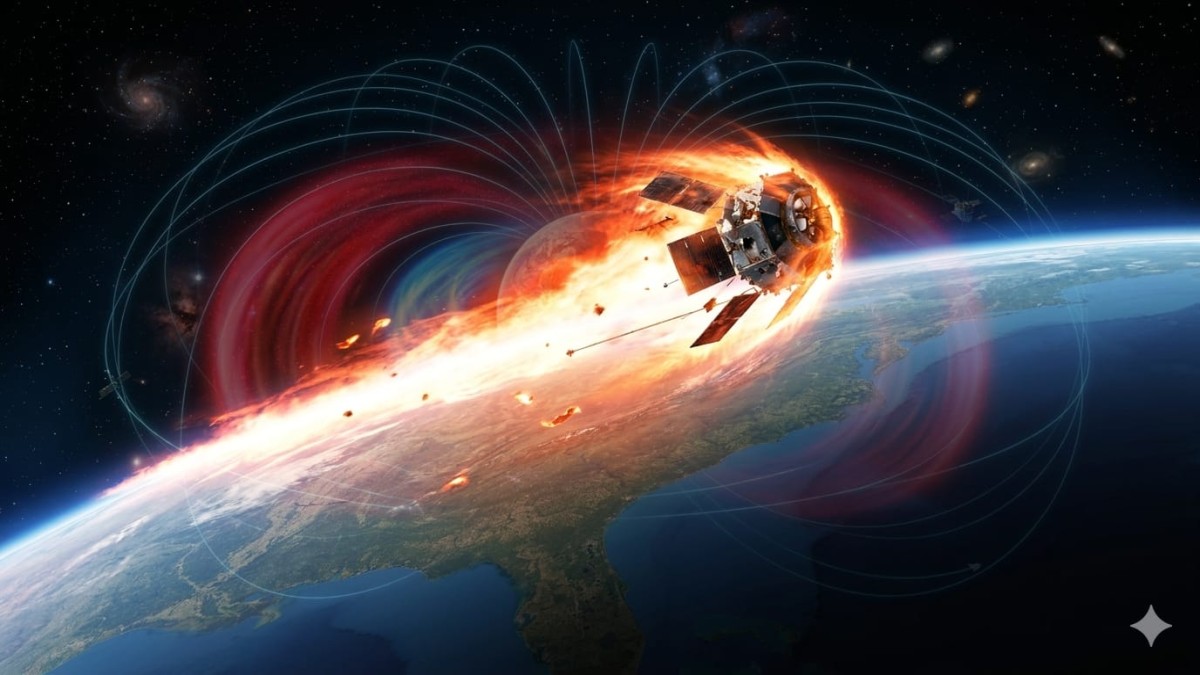
Nearly 14 years after its launch, NASA’s Van Allen Probe A is expected to re-enter Earth’s atmosphere, marking the end of a historic space mission that transformed scientists’ understanding of Earth’s radiation belts and space weather.
According to NASA and the U.S. Space Force, the 1,323-pound (600 kg) spacecraft is predicted to re-enter Earth’s atmosphere around 7:45 p.m. EDT on March 10, 2026, although the exact timing could vary by ±24 hours.
Most of the spacecraft is expected to burn up during atmospheric re-entry, but a few components could survive the intense heat. Despite this possibility, experts say the risk of harm to people on Earth is extremely low, estimated at 1 in 4,200.
The spacecraft’s return to Earth signals the conclusion of a mission that helped scientists understand how radiation around our planet behaves and how solar activity affects satellites, astronauts, and modern technology.
What Is the Van Allen Probe Mission?
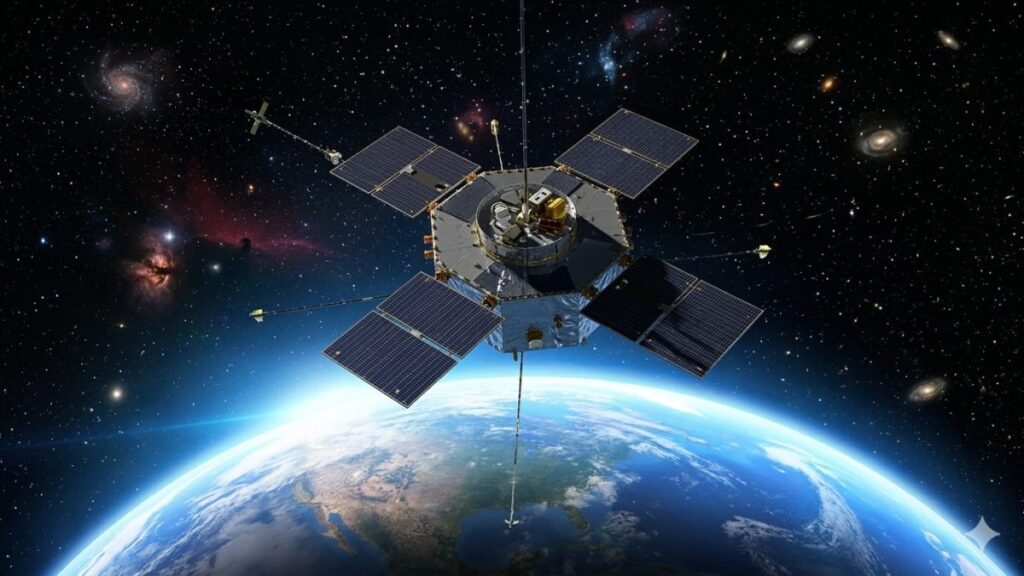
The Van Allen Probes mission was launched by NASA on August 30, 2012, to study the mysterious and dangerous radiation belts surrounding Earth.
Two identical spacecraft were sent into orbit:
- Van Allen Probe A
- Van Allen Probe B
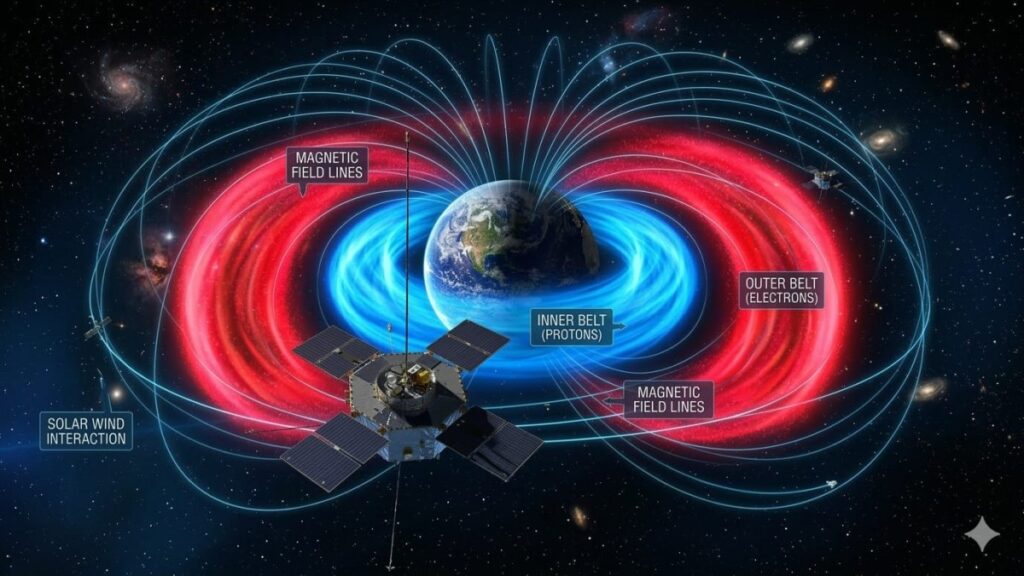
Their primary goal was to explore the Van Allen radiation belts, two massive rings of energetic charged particles trapped by Earth’s magnetic field.
These belts act as a natural shield, protecting the planet from:
- Cosmic radiation
- Solar storms
- High-energy particles from the Sun
- Solar wind constantly streaming through space
Without this protection, life on Earth and modern technology could be severely affected by harmful radiation.
The spacecraft flew repeatedly through these belts to understand how particles are gained, accelerated, and lost within the system
Why Studying Radiation Belts Is Important
The radiation belts are one of the most dangerous regions of near-Earth space.
Most satellites and astronaut missions try to minimize time inside these zones because the radiation can damage electronics and pose risks to human health.
The Van Allen Probes were unique because they were specifically designed to operate inside this hostile environment for years.
By studying the radiation belts in detail, scientists can improve predictions about space weather, which can affect:
- Satellites in orbit
- Astronaut safety
- GPS navigation systems
- Radio communications
- Power grids on Earth
Understanding these effects is crucial in an era where modern society depends heavily on satellite technology.
A Mission That Lasted Far Longer Than Expected
The Van Allen mission was originally planned to last only two years.
However, the spacecraft performed so well that they continued collecting valuable data for nearly seven years, operating from 2012 to 2019.
During this time, the probes traveled through highly elliptical orbits that took them:
- As close as 384 miles (618 km) above Earth
- As far as 18,900 miles (30,415 km) away
This orbit allowed the spacecraft to repeatedly pass through both radiation belts, gathering unprecedented scientific data.
Eventually, both probes ran out of fuel, meaning they could no longer orient themselves toward the Sun to power their systems.
As a result, NASA officially ended the mission in 2019.
Major Discoveries From the Van Allen Probes
During its operational lifetime, the mission produced several groundbreaking discoveries.
One of the most surprising findings was the temporary formation of a third radiation belt.
Scientists discovered that during periods of intense solar activity, an additional radiation belt can form between the two main belts.
This discovery changed scientists’ understanding of how Earth’s radiation environment behaves.
Other important discoveries included:
- How solar storms inject energy into the radiation belts
- How particles become extremely energetic
- How radiation levels suddenly increase or decrease
- How Earth’s magnetic field interacts with solar activity
These insights continue to help scientists improve space weather forecasting models.
Why the Satellite Is Re-Entering Earlier Than Expected
When the mission ended in 2019, scientists initially predicted that the spacecraft would remain in orbit until 2034.
However, the Sun has recently entered a more active phase of its solar cycle, known as solar maximum.
Solar maximum occurs when the Sun produces:
- More solar flares
- Stronger solar storms
- Increased radiation bursts
In 2024, scientists confirmed that the Sun had reached this intense phase earlier than expected.
This increased solar activity caused Earth’s upper atmosphere to expand, which increases atmospheric drag on satellites in orbit.
As a result, Van Allen Probe A experienced more resistance in orbit, slowly pulling it closer to Earth.
This additional drag significantly shortened its expected orbital lifetime, leading to the earlier re-entry in 2026 instead of 2034.
What Happens During Satellite Re-Entry
When satellites re-enter Earth’s atmosphere, they experience extreme friction with atmospheric particles.
This friction creates temperatures that can exceed 1,500°C (2,700°F).
During this process:
- The spacecraft begins to heat up rapidly
- Components start breaking apart
- Most of the structure burns up completely
NASA expects that most of the Van Allen Probe A spacecraft will disintegrate during this phase.
However, some small pieces of heat-resistant materials could survive and reach Earth’s surface.
Because about 70% of Earth is covered by oceans, any surviving debris will most likely fall into the ocean rather than populated areas.
How Dangerous Is the Re-Entry?
NASA says the risk to people is very small.
The estimated chance of injury from falling debris is approximately 1 in 4,200.
While this number might sound concerning at first, scientists consider it extremely low compared to everyday risks.
Space agencies worldwide carefully track satellites re-entering Earth’s atmosphere and monitor their trajectories closely.
NASA and the U.S. Space Force will continue tracking Van Allen Probe A and provide updates as the predicted re-entry time approaches.
What Happens to Van Allen Probe B?
The twin spacecraft, Van Allen Probe B, is still orbiting Earth.
However, it is expected to remain in orbit longer than its counterpart.
Current predictions suggest that Probe B will not re-enter Earth’s atmosphere before 2030.
Like Probe A, its orbit will slowly decay due to atmospheric drag and solar activity.
Eventually, it will also return to Earth in a controlled natural re-entry process.
The Lasting Legacy of the Mission
Although the spacecraft stopped operating in 2019, the data collected by the Van Allen Probes continues to be analyzed today.
Scientists still study the mission’s archived data to understand how solar activity affects Earth’s space environment.
This research plays a critical role in protecting:
- Satellites used for global communication
- Astronauts traveling in space
- Navigation systems such as GPS
- Electrical infrastructure on Earth
The mission significantly improved scientists’ ability to predict space weather events and their potential impacts.
The re-entry of NASA’s Van Allen Probe A marks the end of an extraordinary mission that reshaped our understanding of Earth’s radiation environment.
From discovering a temporary third radiation belt to helping improve space weather forecasting, the mission produced insights that continue to influence space science today.
Even as the spacecraft burns up during its return to Earth, the knowledge it collected will remain valuable for future space missions, satellite protection, and astronaut safety for many years to come.
Disclaimer
This article is for informational and educational purposes only and is based on publicly available reports from NASA, the U.S. Space Force, and other credible news sources. Re-entry predictions for satellites may change due to atmospheric conditions and orbital calculations. Readers should refer to official announcements from NASA or relevant space agencies for the most accurate and updated information.