Oil Shock: South Africa Faces R5–R8 Per Litre Fuel Price Spike as Brent Crude Surges Above $100
Global energy markets are once again under pressure as oil prices surge sharply amid escalating geopolitical tensions in the Middle East. Brent crude oil crossed the psychological threshold of $100 per barrel and briefly surged above $115 on Monday morning, sending shockwaves through financial markets worldwide. For South Africa, the spike in global oil prices could translate into a significant rise in fuel costs, with economists warning that motorists may soon face increases of between R5 and R8 per litre in petrol prices.
The sudden jump in oil prices is already affecting currency markets and inflation forecasts, raising concerns about economic stability in several emerging economies. South Africa, which relies heavily on imported crude oil, is particularly vulnerable to these global price shocks. Experts say the current situation could trigger one of the sharpest fuel price increases the country has seen in recent years.
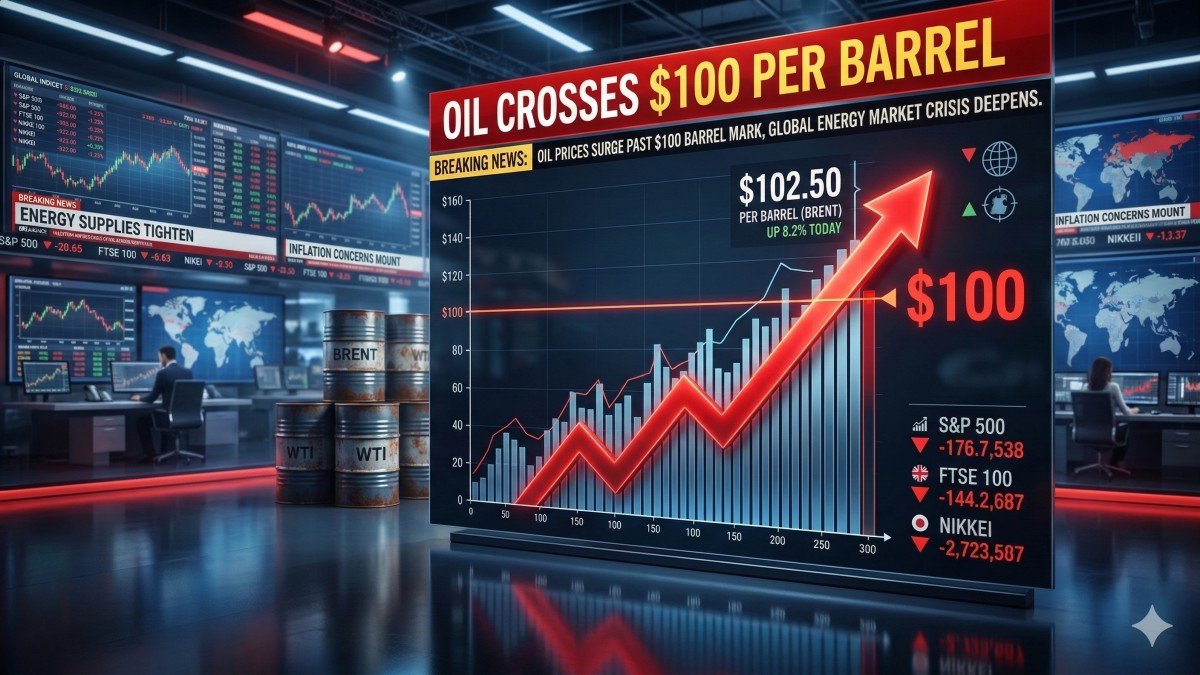
Oil Prices Surge Above $100: Iran War, Strait of Hormuz Closure Triggers Global Energy Crisis
Global oil markets are under pressure as Brent crude crosses $100 per barrel amid escalating Iran conflict and fears of a Strait of Hormuz shutdown. The crisis could disrupt global energy supply, drive inflation, and push fuel prices higher worldwide.
Read Full Report →• Brent crude briefly surged above $115 per barrel on Monday
• Oil above $100 could push petrol under-recovery to about R4.50 per litre
• At $120 oil price, petrol under-recovery may reach R5.40 per litre
• Diesel under-recovery could climb to nearly R10 per litre
• The South African rand weakened to R16.86 per US dollar
Why Global Oil Prices Are Rising Above $100
Image Credit Google Gemini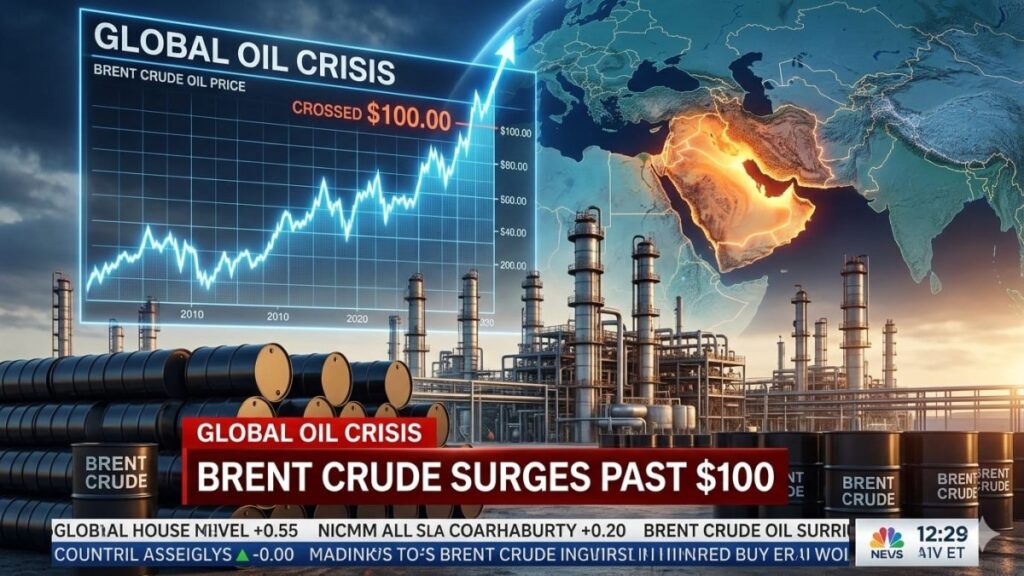
The current oil price rally has been triggered largely by escalating conflict in the Middle East, a region that holds a substantial portion of the world’s oil reserves and production infrastructure. Military strikes by the United States and Israel against Iran have intensified tensions in the region. Iran responded with retaliatory attacks targeting areas where American military bases are located, including Qatar, the United Arab Emirates, and Kuwait.
The conflict has already resulted in more than 1,000 deaths, including Iranian Supreme Leader Ayatollah Ali Khamenei, according to early reports circulating in international media. The geopolitical uncertainty has sparked fears of disruptions to global oil supply routes, particularly through strategic shipping lanes such as the Strait of Hormuz.
The Strait of Hormuz is one of the most critical chokepoints in the global oil trade. Roughly one-fifth of the world’s petroleum supply passes through this narrow waterway. Any threat to its stability can rapidly send oil prices higher as traders anticipate potential supply shortages.
Energy traders and investors have reacted swiftly to the escalating conflict, pushing Brent crude prices to their highest levels in months. As a result, the ripple effects are now spreading across global economies, including South Africa.
How the Oil Shock Could Impact South Africa’s Petrol and Diesel Prices
Economists warn that South African motorists are likely to feel the impact of rising oil prices in the coming months. According to Stanlib chief economist Kevin Lings, the country’s fuel pricing system is already showing significant under-recoveries due to the sudden increase in crude oil costs.
Under-recovery occurs when the actual cost of fuel imports is higher than the current regulated retail price. When this gap grows too large, the government eventually adjusts fuel prices upward to compensate.
Lings estimates that if the global oil price remains around $100 per barrel, petrol prices could see an under-recovery of approximately R4.50 per litre, while diesel could reach around R8.30 per litre. If oil prices climb further to $120 per barrel, the situation becomes even more severe.
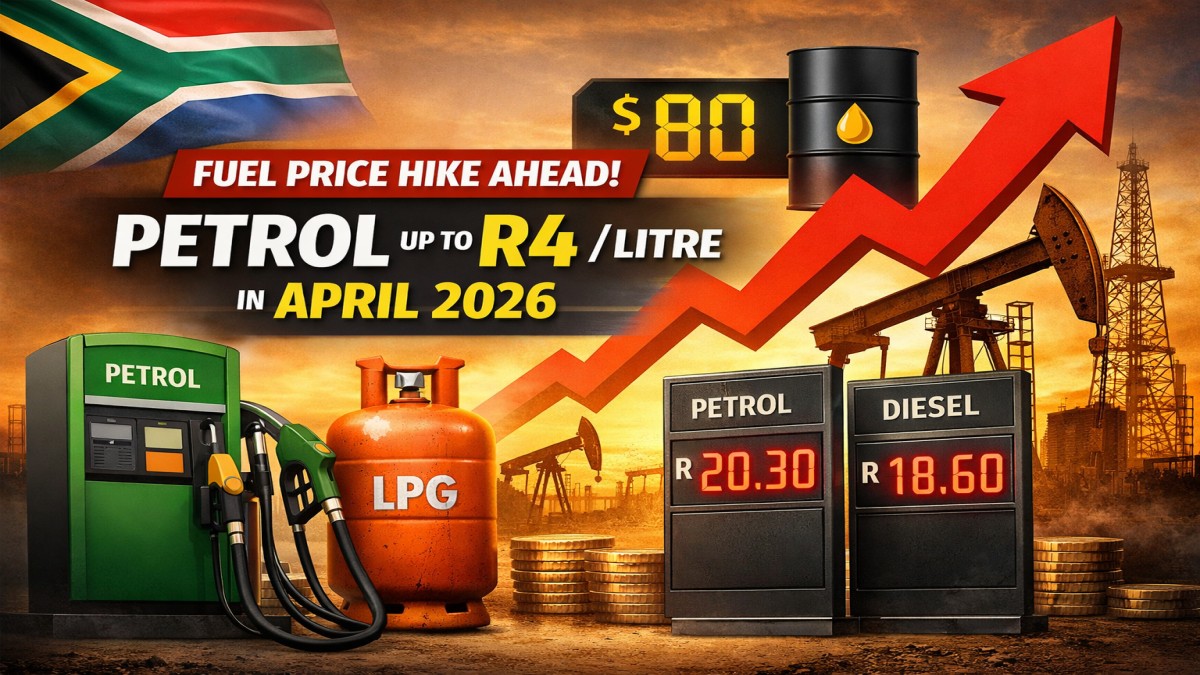
South Africa Fuel Price Warning: Petrol Could Rise Up to R4 in April 2026 Amid Oil Price Surge
South African motorists could soon face a major fuel price increase as global oil prices surge and geopolitical tensions disrupt energy markets. Analysts warn petrol prices may rise by up to R4 per litre in April, potentially pushing transport costs and inflation higher across the country.
Read Full Story →At $100 Oil Price
Petrol: about R4.50 per litre
Diesel: about R8.30 per litre
At $120 Oil Price
Petrol: about R5.40 per litre
Diesel: about R10 per litre
These estimates do not yet include the inflation-linked fuel levy increases announced earlier this year by Finance Minister Enoch Godongwana in the national budget. If those levies take effect in April without government intervention, motorists could face even higher costs at the pump.
The final fuel price adjustment will depend on the average monthly oil price and exchange rate. If oil remains elevated throughout the month, the April fuel price increase could be substantial.
Rand Weakness Adding More Pressure to Fuel Costs
In addition to rising oil prices, South Africa is also facing currency pressure. On Monday morning, the South African rand weakened to around R16.86 against the US dollar. Since oil is priced internationally in dollars, a weaker rand makes fuel imports significantly more expensive.
Market commentator Johann Biermann noted that the rand price of Brent crude has already surged by more than 71% during March alone. This sharp increase reflects both the rising global oil price and the weakening domestic currency.
When these two factors combine, the impact on local fuel prices becomes even more severe. The cost of importing crude oil rises dramatically, and those costs ultimately filter down to consumers through higher petrol and diesel prices.
Economists Warn of Inflation and Possible Interest Rate Hikes
The surge in fuel prices could have far-reaching consequences for South Africa’s broader economy. Higher fuel costs tend to push up transportation expenses, which then increase the price of goods and services across the economy.
As a result, economists warn that inflation could accelerate in the coming months. Earlier in the year, many analysts had predicted that the South African Reserve Bank might begin cutting interest rates to support economic growth. However, the new oil shock has changed that outlook.
Kevin Lings and several other economists now believe that interest rate cuts are unlikely in the near future. In fact, if inflation rises significantly due to fuel costs, the central bank could even consider raising interest rates to keep inflation under control.
Economist Peter McLachlan emphasized that the duration and geographic spread of the Middle East conflict will be a key factor in determining how severe the economic impact becomes.
“If the conflict remains limited and short-lived, markets may stabilize quickly,” he said. “But if it spreads across the region, the pressure on oil prices could persist for months.”
Projected Fuel Price Increases for April
Early data from the first week of March already shows significant under-recoveries in both petrol and diesel prices. Based on current projections, motorists could face the following increases if the trend continues.
Petrol 93: increase of R2.28 per litre
Petrol 95: increase of R2.41 per litre
Diesel 0.05% (wholesale): increase of R4.39 per litre
Diesel 0.005% (wholesale): increase of R4.50 per litre
Illuminating paraffin: increase of R6.60 per litre
These projections represent mid-month estimates and could change depending on how oil prices move during the remainder of the pricing period. If Brent crude continues to rise or if the rand weakens further, the final increases could be even larger.
Middle East Conflict and Its Impact on Global Oil Supply
The Middle East plays a central role in the global energy market, accounting for a large portion of the world’s oil reserves and production capacity. Any instability in the region can immediately influence global energy prices.
In the current crisis, military strikes and retaliatory attacks have raised fears that oil infrastructure or shipping routes could be disrupted. Even the possibility of supply interruptions is enough to cause sharp price increases as traders attempt to secure future supply.
Financial markets are particularly sensitive to geopolitical risk in oil-producing regions. When tensions escalate, investors often rush to buy oil futures as a hedge against potential shortages, driving prices higher in the process.
For countries like South Africa that rely heavily on imported fuel, these geopolitical shocks can quickly translate into higher domestic prices.
5 Ways South African Motorists Can Save Fuel During Price Surge
With fuel prices likely to rise sharply, motorists may need to adopt smarter driving habits to manage their fuel expenses. According to Eugene Herbert, CEO of MasterDrive, even small changes in driving behavior can make a noticeable difference in fuel consumption.
1. Use the correct engine oil recommended by the manufacturer.
2. Maintain proper tyre pressure and replace worn tyres.
3. Combine short trips to avoid multiple cold engine starts.
4. Service your vehicle regularly and replace worn filters or spark plugs.
5. Avoid aggressive acceleration and use the correct gear when driving.
Using oil with the wrong viscosity can increase engine resistance, forcing the engine to burn more fuel to maintain performance. Drivers should always follow manufacturer guidelines when selecting engine oil and ensure that oil changes are performed at the recommended intervals.
Tyre condition also plays an important role in fuel efficiency. Worn tyres have less traction and can cause the vehicle to use more fuel as the engine works harder to maintain speed. Low tyre pressure and wheel misalignment can further increase fuel consumption.
Short trips of less than five kilometres are particularly inefficient because engines consume more fuel before reaching optimal operating temperature. Combining errands into a single trip can help improve fuel efficiency.
Regular vehicle servicing is another key factor. Dirty air filters, worn spark plugs, and faulty fuel injectors can significantly increase fuel consumption. Maintaining the vehicle properly ensures that the engine operates at peak efficiency.
Finally, driving style can make a major difference. Harsh acceleration, driving in the wrong gear, or climbing hills in high gears can all increase fuel usage. Smooth acceleration and proper gear selection help reduce fuel consumption.
A Challenging Period Ahead for South African Motorists
The global oil shock has created a challenging situation for South African consumers and policymakers alike. Rising fuel prices could strain household budgets, increase transportation costs, and contribute to higher inflation across the economy.
Much will depend on how the geopolitical situation in the Middle East evolves in the coming weeks. If tensions ease and oil prices stabilize, the impact may be temporary. However, if the conflict intensifies or spreads further across the region, fuel prices could remain elevated for an extended period.
For now, economists and market analysts are closely monitoring developments in both global energy markets and the South African currency. Motorists, meanwhile, may need to prepare for higher fuel costs as the ripple effects of the global oil shock continue to unfold.
Disclaimer
The information presented in this article is based on publicly available data, market analysis, and expert commentary regarding global oil prices and South Africa’s fuel pricing outlook. Fuel price projections are estimates and may change depending on fluctuations in global crude oil prices, exchange rates, government policies, and other economic factors. Readers are advised to follow official announcements from relevant authorities for the most accurate and updated fuel price information.