Total Lunar Eclipse on March 3, 2026: Blood Moon to Dazzle Over 3 Billion People Worldwide
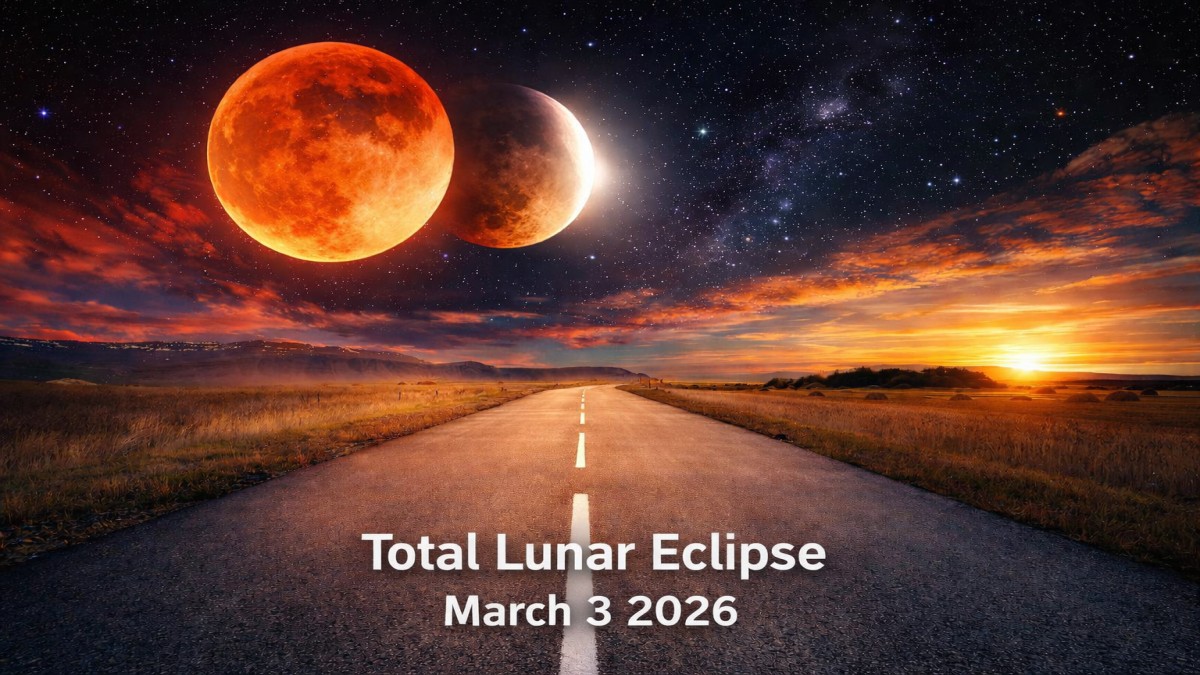
A spectacular total lunar eclipse will unfold in the early hours of March 3, 2026, transforming the full moon into a deep red “blood moon” for millions of skywatchers across North America, Australia, New Zealand and eastern Asia. According to the provided timing data, more than 40% of the world’s population — over three billion people — will be able to witness at least a portion of the total phase, weather permitting.
This celestial event will be the last total lunar eclipse visible anywhere on Earth until New Year’s Eve 2028–2029, making it one of the most significant astronomical events of the year.
What Is Happening on March 3?
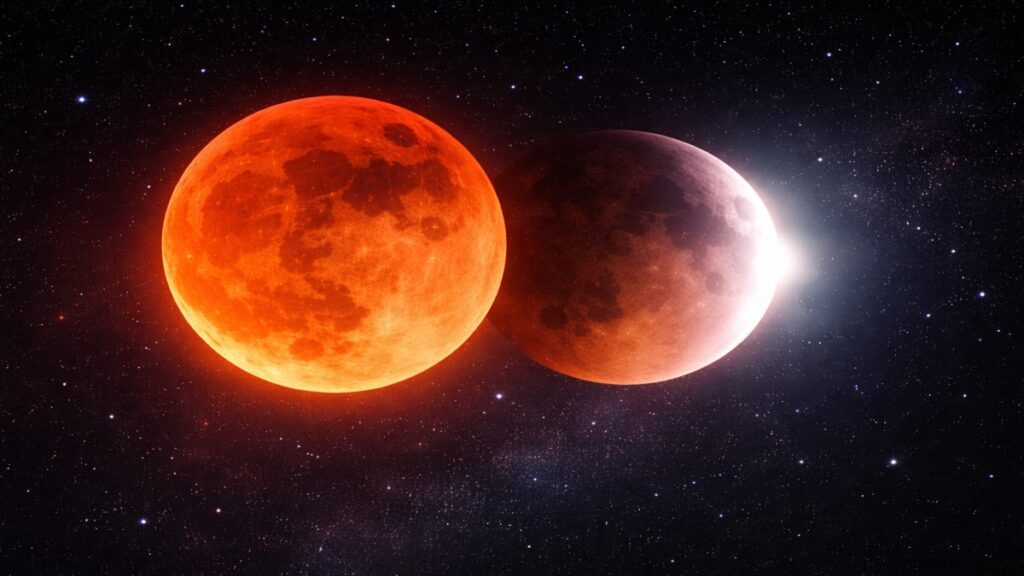
During this event, the full moon will pass directly into Earth’s darkest central shadow, known as the umbra. As the alignment between the Sun, Earth and Moon becomes exact, sunlight will filter through Earth’s atmosphere and bend toward the lunar surface. The shorter blue wavelengths scatter away, while the longer red wavelengths continue through the atmosphere and illuminate the moon. This atmospheric filtering effect gives the moon its striking reddish-orange glow, commonly referred to as a blood moon.
Unlike a solar eclipse, this phenomenon is completely safe to watch with the naked eye. No filters, telescopes or special glasses are required. Observers simply need a clear view of the western or overhead sky, depending on their location.
Image Credit: AI Generated Graphic | S24 Bulletin Digital Desk
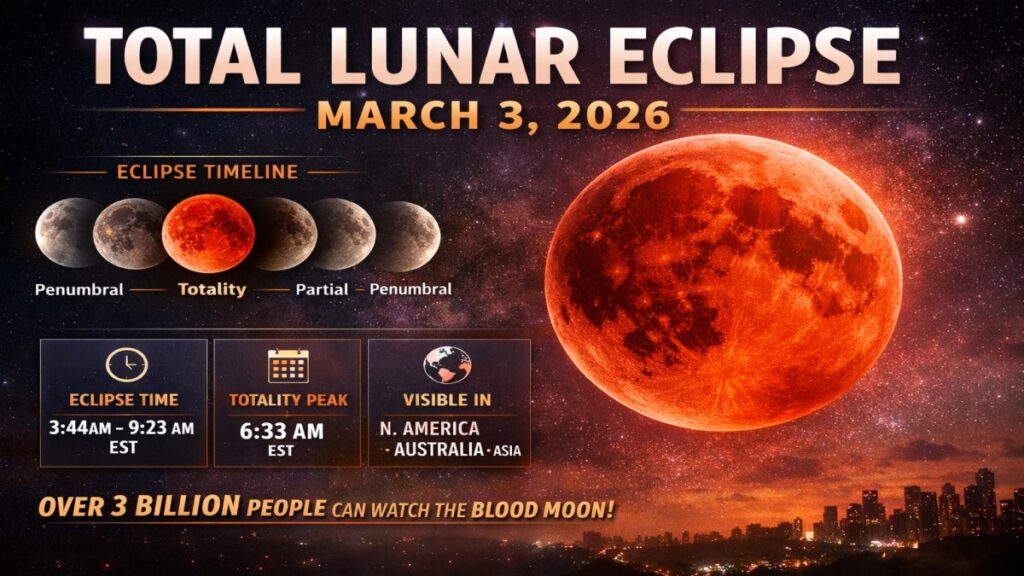
Table of Contents
Complete Timeline of the Eclipse (Eastern Time – EST)
The total lunar eclipse will last approximately 5 hours and 39 minutes from beginning to end. Below is the detailed progression:
- Penumbral eclipse begins: 3:44 a.m. EST (08:44 GMT)
- Partial eclipse begins: 4:50 a.m. EST (09:50 GMT)
- Totality begins: 6:04 a.m. EST (11:04 GMT)
- Maximum eclipse: 6:33 a.m. EST (11:33 GMT)
- Totality ends: 7:04 a.m. EST (12:03 GMT)
- Partial eclipse ends: 8:17 a.m. EST (13:17 GMT)
The most dramatic moment will occur at 6:33 a.m. EST, when the moon sits in the deepest part of Earth’s shadow during peak totality.
Totality will last for approximately 58 minutes, providing nearly an hour to observe the moon in its fully eclipsed, blood-red state.
Best Places to Watch
The eclipse will be visible across:
- North America
- Australia
- New Zealand
- Eastern Asia
The western half of North America, Australia and the Pacific region are expected to have the best views. Observers in the eastern United States will see the blood moon shortly before moonset, meaning they will not witness the entire duration of totality.
Because lunar eclipses do not have a narrow path of totality like solar eclipses, visibility depends entirely on whether the moon is above the horizon and whether the sky is clear.
Key Viewing Times by Time Zone
Here are the specific totality timings for major time zones and regions:
1️⃣ Complete Lunar Eclipse Timeline (Eastern Time – EST)
| Eclipse Stage | Time (EST) | Time (GMT) |
|---|---|---|
| Penumbral Eclipse Begins | 3:44 a.m. | 08:44 GMT |
| Partial Eclipse Begins | 4:50 a.m. | 09:50 GMT |
| Totality Begins | 6:04 a.m. | 11:04 GMT |
| Maximum Eclipse | 6:33 a.m. | 11:33 GMT |
| Totality Ends | 7:04 a.m. | 12:03 GMT |
| Partial Eclipse Ends | 8:17 a.m. | 13:17 GMT |
| Eclipse Concludes | 9:23 a.m. | — |
2️⃣ United States Time Zone
| U.S. Time Zone | Totality Timing | Date |
|---|---|---|
| Eastern (EST) | 6:04 – 7:02 a.m. | March 3, 2026 |
| Central (CST) | 5:04 – 6:02 a.m. | March 3, 2026 |
| Mountain (MST) | 4:04 – 5:02 a.m. | March 3, 2026 |
| Pacific (PST) | 3:04 – 4:02 a.m. | March 3, 2026 |
| Alaska (AKST) | 2:04 – 3:02 a.m. | March 3, 2026 |
| Hawaii (HST) | 1:04 – 2:02 a.m. | March 3, 2026 |
3️⃣ Australia & New Zealand
| Location | Totality Timing | Date |
|---|---|---|
| New Zealand (NZDT) | 12:04 – 1:02 a.m. | March 4, 2026 |
| Sydney (AEDT) | 10:04 – 11:02 p.m. | March 3, 2026 |
| Brisbane (AEST) | 9:04 – 10:02 p.m. | March 3, 2026 |
| Adelaide (ACDT) | 9:34 – 10:32 p.m. | March 3, 2026 |
| Darwin | 8:34 – 9:32 p.m. | March 3, 2026 |
| Perth | 7:04 – 8:02 p.m. | March 3, 2026 |
4️⃣ East Asia
| City | Totality Timing | Date |
|---|---|---|
| Tokyo (JST) | 8:04 – 9:02 p.m. | March 3, 2026 |
| Seoul (KST) | 8:04 – 9:02 p.m. | March 3, 2026 |
| Beijing (CST) | 7:04 – 8:02 p.m. | March 3, 2026 |
| Hong Kong (HKT) | 7:04 – 8:02 p.m. | March 3, 2026 |
These times represent when the moon will be fully immersed in Earth’s umbra and display its deepest red hue.
Image Credit: AI Generated Graphic | S24 Bulletin Digital Desk
Western Washington Viewing Conditions
In western Washington, the eclipse of the March full moon — also known as the Worm Moon — will begin around 1:50 a.m. PST and peak between 3:04 a.m. and 4:02 a.m. PST. Maximum eclipse in this region will occur at 3:33 a.m.
However, increasing cloud cover overnight may affect viewing conditions. A weather system moving through the region could bring thicker clouds after midnight, potentially obscuring the total phase.
The western United States overall is expected to offer some of the best viewing opportunities, provided skies remain clear.
Will There Be a Path of Totality?
Unlike the 2024 total solar eclipse, a total lunar eclipse does not have a narrow path of totality. The reason is simple: Earth’s shadow is large enough to cover the entire moon. As long as the moon is above the horizon and skies are clear, viewers in the visibility zone can witness totality.
For example, Ohio will be able to see the eclipse if weather conditions allow. However, cloud cover may impact viewing in certain parts of the state.
What Causes the Blood-Red Color?
During totality, the moon does not disappear. Instead, it glows red because Earth’s atmosphere bends sunlight toward it. The same scattering process that produces colorful sunrises and sunsets is responsible for the red appearance.
Shorter blue wavelengths scatter in Earth’s atmosphere, while longer red wavelengths travel farther and reach the lunar surface. This gives the moon its dramatic copper or crimson hue.
The exact shade of red can vary depending on atmospheric conditions such as dust, pollution and cloud cover.
The Worm Moon of March
The March full moon is traditionally known as the Worm Moon. This name is associated with the seasonal thaw when earthworms begin to emerge as temperatures rise. The Dakota people also refer to it as the Sore Eyes Moon, referencing the bright sunlight reflecting off late-season snow.
In 2026, this Worm Moon becomes even more special due to the total lunar eclipse occurring at the same time.
The full moon will reach 100% illumination by 6:38 a.m. ET on March 3, though the highlight of the morning will occur earlier during totality.
Detailed Breakdown of Eclipse Phases
Penumbral Phase – 3:44 a.m. EST
The moon begins entering Earth’s outer shadow. This phase causes subtle shading and may be difficult to detect initially.
Partial Eclipse – 4:50 a.m. EST
Earth’s dark umbra begins covering the lunar surface. Observers will notice a distinct dark “bite” appearing on the moon.
Totality – 6:04 a.m. EST
The moon is fully immersed in Earth’s shadow and begins glowing red.
Maximum Eclipse – 6:33 a.m. EST
The moon reaches the deepest point in the umbra.
End of Partial Phase – 8:17 a.m. EST
The moon exits Earth’s umbra.
End of Eclipse – 9:23 a.m. EST
The eclipse concludes after the moon leaves the penumbral shadow.
A Rare Selenelion Possibility
For some observers on the U.S. East Coast, the moon will set during totality as the sun rises. This rare alignment can produce a selenelion — a phenomenon where the eclipsed moon and the rising sun are visible at the same time due to atmospheric refraction.
Why This Eclipse Matters
Total lunar eclipses do not occur frequently for any single location. After March 3, 2026, the next total lunar eclipse visible anywhere on Earth will not happen until New Year’s Eve 2028–2029.
With over three billion people potentially able to see at least part of the total phase, this event ranks among the most widely observable celestial events of the decade.
How to Watch
- No protective glasses required
- Safe to view with naked eye
- Binoculars can enhance detail
- Find a dark area away from city lights
- Check local weather forecasts
For those unable to observe directly, livestream coverage will be available online.
Final Overview
The total lunar eclipse of March 3, 2026 will deliver a dramatic blood moon visible to more than 40% of the world’s population. Beginning at 3:44 a.m. EST and reaching maximum at 6:33 a.m. EST, the event will provide nearly an hour of totality.
The western United States, Australia and Pacific regions are expected to have the best viewing opportunities, while eastern North America will witness the moon setting during totality.
Lasting nearly six hours from start to finish, this eclipse combines the beauty of the Worm Moon with one of astronomy’s most captivating natural displays.
For skywatchers across multiple continents, the early morning hours of March 3 promise an unforgettable celestial show.
FAQ
Question 1: What time is the Total Lunar Eclipse on March 3, 2026?
Answer: The total lunar eclipse begins totality at 6:04 a.m. EST, peaks at 6:33 a.m., and lasts for approximately 58 minutes.
Question 2: Where will the March 3, 2026 Blood Moon be visible?
Answer: The eclipse will be visible across North America, Australia, New Zealand and eastern Asia, weather permitting.
Question 3: How long will the total lunar eclipse last?
Answer: The full eclipse duration is about 5 hours and 39 minutes, with 58 minutes of totality.
Question 4: Is it safe to watch the lunar eclipse?
Answer: Yes, lunar eclipses are completely safe to view with the naked eye. No special glasses are required.