Indian Markets Reel After U.S.–Iran Strikes: Sensex Slides 2,700 Points, Nifty Faces Sharpest Volatility in 8 Months
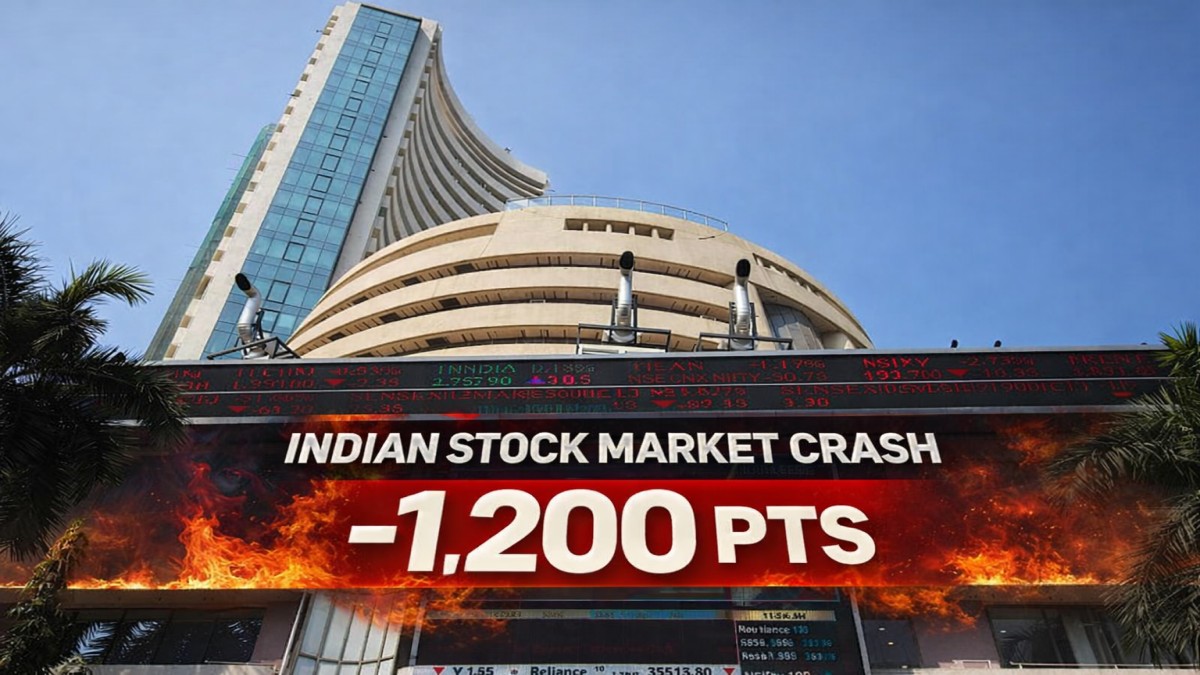
Indian equities witnessed a dramatic sell-off on Monday after geopolitical tensions in West Asia escalated sharply following U.S. and Israeli strikes on Iran. The attacks reportedly resulted in the death of Iran’s Supreme Leader, triggering global market anxiety and fears of a broader regional conflict.
The shockwaves were immediately visible on Dalal Street. The benchmark indices — BSE Sensex and Nifty 50 — opened sharply lower, reflecting panic across global financial markets.
Market Snapshot: A Day of Extreme Volatility
The Nifty 50 endured its most volatile session in eight months, while the volatility gauge India VIX surged 23.54% to 16.9 — marking the fastest single-day spike since April 7, 2025.
The day began with a steep 2% gap-down opening after reports suggested Iran had moved to shut down the strategically critical Strait of Hormuz, through which nearly one-fifth of global oil supply flows.
Though indices recovered partially from the day’s lows, sentiment remained fragile throughout the session.
Indian Market Performance – Monday
| Index | Close | Change |
|---|---|---|
| Sensex | 80,238.85 | -1.25% (~2,700 pts intraday) |
| Nifty 50 | 24,865.70 | -1.25% |
| India VIX | 16.9 | +23.54% |
Oil Shock: The Real Trigger Behind the Sell-Off
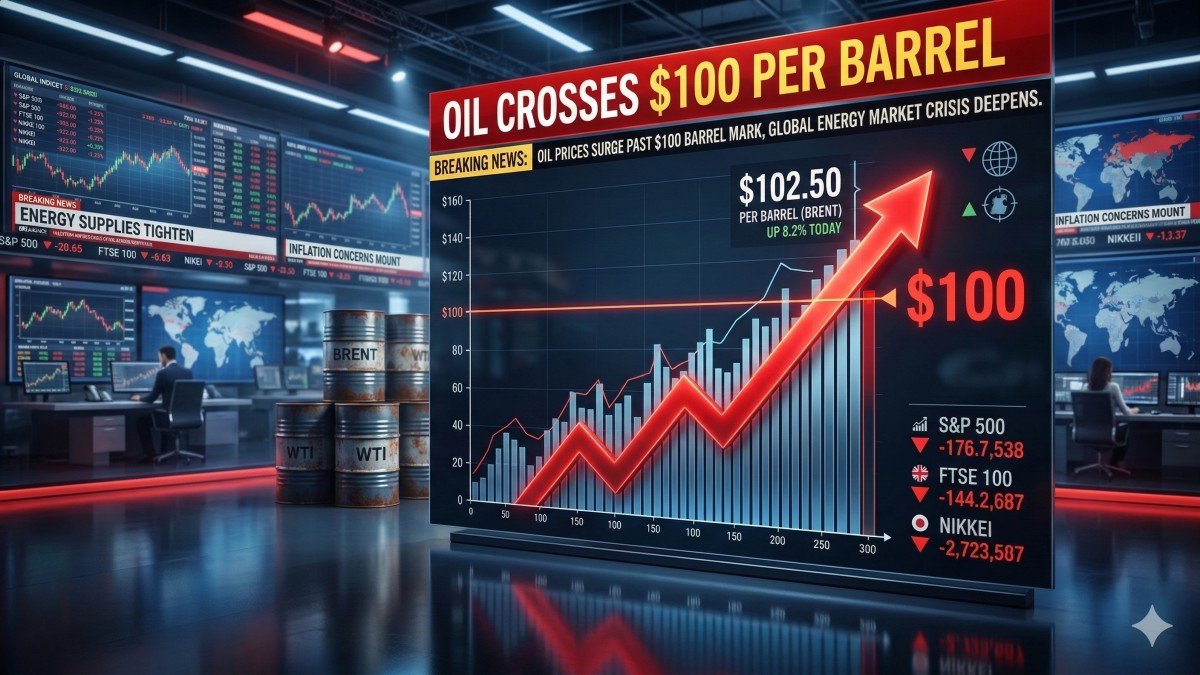
The market’s sharp reaction was primarily linked to crude oil fears. Brent crude futures jumped nearly 6% to $77 per barrel and briefly touched $79.15 — a near one-year high — amid concerns that shipping traffic through the Strait of Hormuz could be disrupted.
A blockade or prolonged restriction at the strait would severely impact global energy trade, given its strategic importance. Even though OPEC+ has announced incremental output increases starting April, analysts warn that additional supply cannot fully offset a chokepoint disruption of this magnitude.
For India — a major oil importer — rising crude prices mean:
- Widening trade deficit
- Pressure on the rupee
- Higher inflation risk
- Margin stress for oil marketing companies (OMCs)
The Indian rupee also weakened to a one-month low, compounding concerns.
Image Credit: Reuters / Bombay Stock Exchange (BSE) File Photo
Sectoral Impact: Broad-Based Selling
Out of 21 sectoral indices on the NSE, only Nifty Metal and Nifty Pharma managed to close in the green. Banking, automobiles, financial services, and infrastructure stocks bore the brunt of selling pressure.
Market breadth was decisively negative:
- Total stocks traded: 3,296
- Advancing stocks: 651
- Declining stocks: 2,578
This reflects broad-based liquidation rather than isolated profit-booking.
Nifty 50 – Movers of the Day
Top Gainers
| Stock | Change |
|---|---|
| BEL | +2.13% |
| HINDALCO | +1.70% |
| SUNPHARMA | +0.93% |
| ONGC | +0.63% |
| ITC | +0.35% |
Top Losers
| Stock | Change |
|---|---|
| INDIGO | -6.09% |
| LT | -5.24% |
| ADANIPORTS | -3.43% |
| MARUTI | -3.29% |
| ASIANPAINT | -3.08% |
Why Defence and Pharma Outperformed
Interestingly, defence-linked and pharmaceutical counters saw buying interest. Stocks like BEL and ONGC gained amid expectations of increased defence spending and stable energy exploration margins.
Pharma stocks benefited from safe-haven rotation and defensive positioning by institutional investors.
Sensex Movers
On the Sensex, the pattern was similar.
Gainers:
- BEL (+2.09%)
- SUNPHARMA (+0.84%)
- ITC (+0.38%)
Losers:
- INDIGO (-6.25%)
- LT (-5.00%)
- ADANIPORTS (-3.33%)
- MARUTI (-3.29%)
- RELIANCE (-2.58%)
Heavyweight declines in financials and conglomerates amplified the index’s fall.
Volatility: Fastest Spike Since April 2025
The 23.54% surge in India VIX marks the sharpest one-day jump since April 2025, when volatility spiked over 65% in a single session. Elevated VIX levels typically indicate uncertainty and heightened options pricing, signaling nervous investor sentiment.
Historically, such volatility bursts during geopolitical crises tend to cool off unless the conflict escalates materially.
Expert View: Avoid Panic Selling
Market strategists across brokerages and AMCs stressed that war-led volatility tends to be temporary.
Key takeaways from analyst commentary:
- Short-term volatility is inevitable.
- Long-term structural growth remains intact.
- Investors exiting during crisis-driven corrections often miss swift recoveries.
- Discipline and gradual accumulation outperform panic exits.
Technically, analysts suggest that as long as:
- Nifty holds above 24,750
- Sensex remains above 80,000
a rebound attempt cannot be ruled out.
The Gold Factor
Gold rallied 3% on COMEX to $5,409.7 per ounce as safe-haven demand surged. Escalation fears, evacuation advisories by major nations, and concerns about energy supply disruptions drove investors toward precious metals.
However, analysts caution that a decisive breakout would likely require a major escalation — such as a large-scale military confrontation directly involving U.S. assets.
What Should Investors Do Now?
1️⃣ Do Not Panic
Conflict-driven corrections are often sharp but short-lived.
2️⃣ Watch Oil Closely
The duration of any disruption in the Strait of Hormuz will determine whether crude prices spike temporarily or sustainably.
3️⃣ Accumulate Quality Stocks
Experts recommend gradual buying in:
- Banking
- Automobiles
- Capital goods
- Defence
4️⃣ Maintain Asset Allocation
Diversification remains the best shield during geopolitical shocks.
Conclusion: Volatility Is High, But Structural Story Intact
Monday’s sell-off underscores how interconnected global geopolitics and financial markets have become. The combination of energy insecurity, currency weakness, and risk aversion triggered sharp declines across Indian equities.
Yet history suggests that while wars and geopolitical tensions create immediate tremors, long-term equity trends are driven more by economic fundamentals than by episodic conflicts.
If crude prices stabilize and Hormuz traffic resumes normally, markets could recover swiftly. If disruptions persist for weeks, volatility may intensify.
For now, discipline — not panic — appears to be the most rational strategy.
Disclaimer
The information provided in this article is for informational and educational purposes only and should not be considered as financial or investment advice. Stock market investments are subject to market risks, including volatility arising from geopolitical events. Readers are advised to consult their financial advisor before making any investment decisions. The publisher is not responsible for any losses incurred based on the information presented.